

SpaceX Scrubs Starship Flight 13 Following Engine Ignition Failure
SpaceX aborted the 13th test flight of its Starship rocket after several Raptor engines failed to ignite during the countdown sequence. The company plans to replace two engines before attempting another launch early next week.
SpaceX halted the 13th test flight of its Starship rocket and Super Heavy booster on Thursday after an automated abort command triggered at the final moments of the countdown. The launch, which was scheduled to take place at the company's Starbase facility in South Texas, was called off when the flight computers detected that a portion of the Super Heavy booster's 33 Raptor engines failed to initiate their startup sequence, according to Ars Technica.
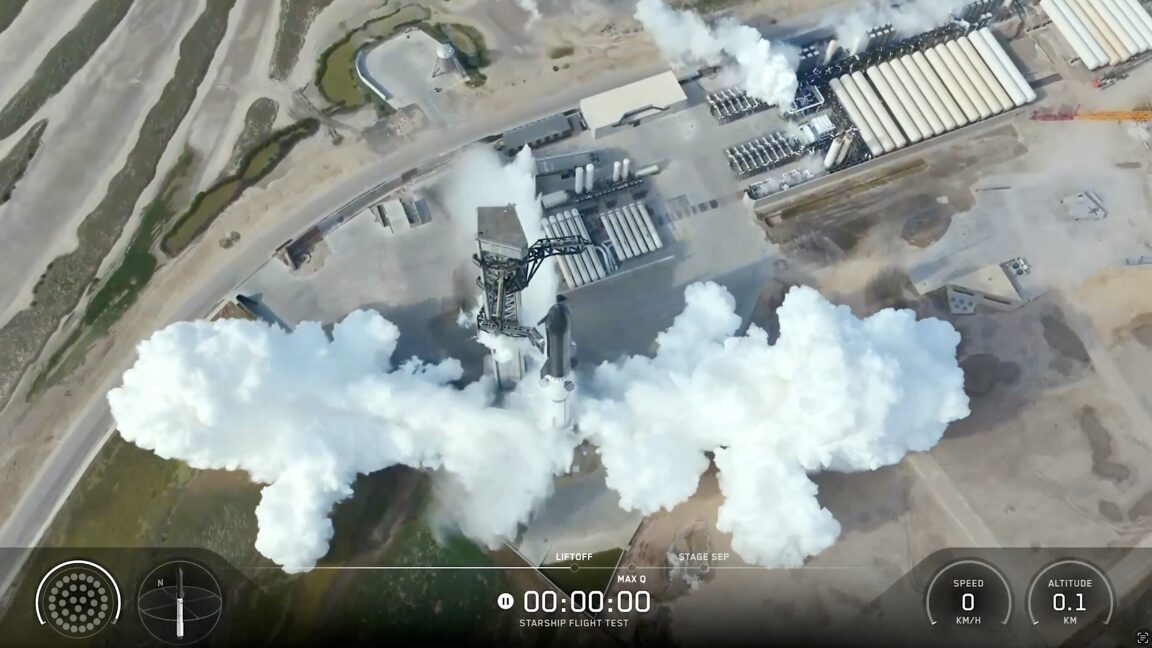
Following the abort, ground crews began the process of offloading more than 11.5 million pounds of liquid methane and liquid oxygen propellant from the two-stage vehicle. While SpaceX did not officially confirm the exact number of engines that failed to ignite, telemetry data displayed during the company's live stream suggested that four of the 33 engines did not start. SpaceX CEO Elon Musk later confirmed via social media that the automatic abort was triggered by the engine ignition failure and stated that the team intends to replace two of the Raptor engines on the booster before making another attempt, which is currently projected for early next week.
This mission represents the second flight test for the upgraded Starship Version 3 rocket and the third-generation Raptor engine. The Raptor 3 design, which debuted in May, is central to SpaceX's efforts to increase the reliability and performance of the world's most powerful launch vehicle. The current test flight aims to refine several technical adjustments, including modifications to the engine startup sequence intended to improve the booster's stability during its post-separation flip maneuver.
The reliance on a staggered ignition sequence for the 33-engine Super Heavy booster remains a complex engineering challenge. Each Raptor engine is designed to generate over half a million pounds of thrust, requiring precise coordination to ensure the vehicle clears the launch pad safely. The failure to ignite on the pad highlights the ongoing iterative development process SpaceX employs for the Starship program, where flight data from each attempt is used to diagnose and rectify hardware or software anomalies.
As SpaceX prepares for the next launch window, the focus remains on the performance of the Raptor 3 engines. While the previous flight in May demonstrated the viability of the Version 3 architecture, the issues encountered during the ignition sequence on Thursday underscore the difficulties inherent in scaling up the most powerful rocket ever built. The outcome of the upcoming attempt will be a critical indicator of whether the recent engine modifications have successfully addressed the performance concerns identified during the previous mission.