

The claim of neutrality is, in itself, a very specific political choice that simply says that the existing arrangements of power should continue undisturbed.
The recent detention of Sonam Wangchuk and the subsequent crackdown on protesters at Jantar Mantar signal a shift in the political engagement of India's traditionally apolitical middle class. This awakening is driven by a realization that state policies, from fuel standards to examination integrity, directly impact their personal lives.
The forcible removal of Sonam Wangchuk from Jantar Mantar and the subsequent lathi charge against protesters marching toward Parliament are not merely isolated incidents in a long cycle of civil unrest. They represent a profound, if reluctant, political awakening among a demographic that has long prided itself on its detachment from the state. As noted by Siya Dulari Choudhary, the crowd at these protests is increasingly composed of habitual bystanders who are finally realizing that the state’s reach is not confined to the margins of society.
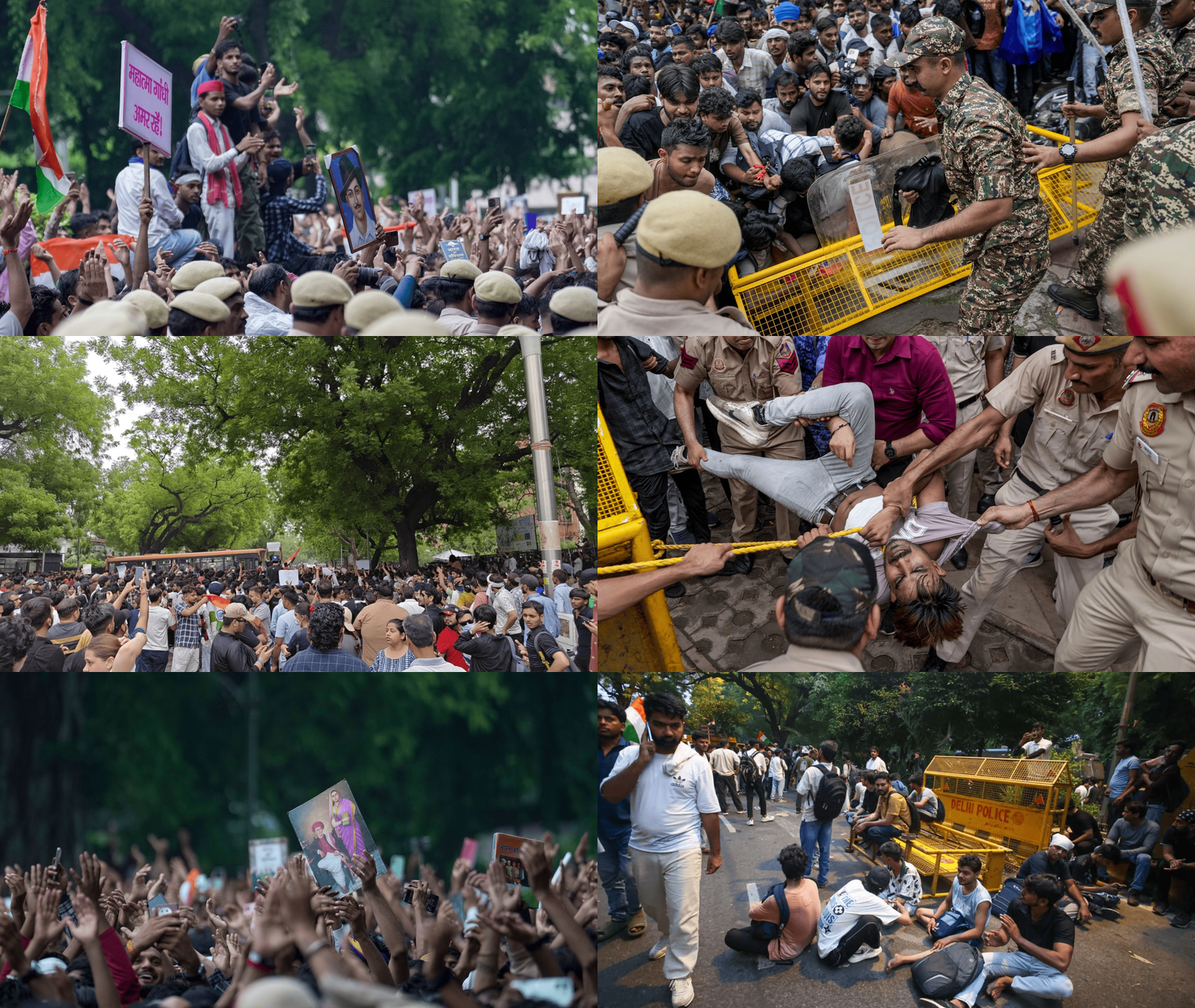
For decades, the Indian middle class has operated under the illusion that neutrality is a safe harbor. However, this stance is increasingly untenable. When the state’s policy decisions—whether they concern the technical specifications of fuel or the integrity of national examinations like NEET and CBSE—begin to erode the comfort of the affluent, the facade of apoliticism crumbles. We saw this recently when a prominent vlogger publicly complained about the impact of ethanol-blended petrol on his luxury vehicle, an incident that, while trivial on its surface, highlights how even the most insulated citizens are now colliding with the consequences of state governance.
Critics might argue that these protests are merely the noise of a disgruntled minority, or that the middle class should remain focused on their private pursuits rather than engaging in the messy business of public dissent. Yet, this perspective ignores the reality that the personal is inherently political. When meritocracy is undermined by systemic examination leaks and when the daily environment of urban life becomes a site of contention, the choice to remain silent is no longer a neutral act; it is an endorsement of the status quo. The widening scope of state intervention means that the distance between the bystander and the target is shrinking rapidly.
Ultimately, the events at Jantar Mantar serve as a mirror. If the state continues to operate without accountability, it will inevitably exhaust the patience of those who once believed they were immune to its reach. The era of the comfortable, silent bystander is coming to an end, not because they have suddenly become activists, but because the state has left them with no other choice but to notice the world they inhabit.