

Sonam Wangchuk Outlines Conditions for Ending Hunger Strike Amid Hospitalization
Activist Sonam Wangchuk has specified three conditions for concluding his 21-day hunger strike while currently under medical observation at Safdarjung Hospital. The demands focus on government accountability regarding the NEET examination paper leaks and parliamentary intervention.
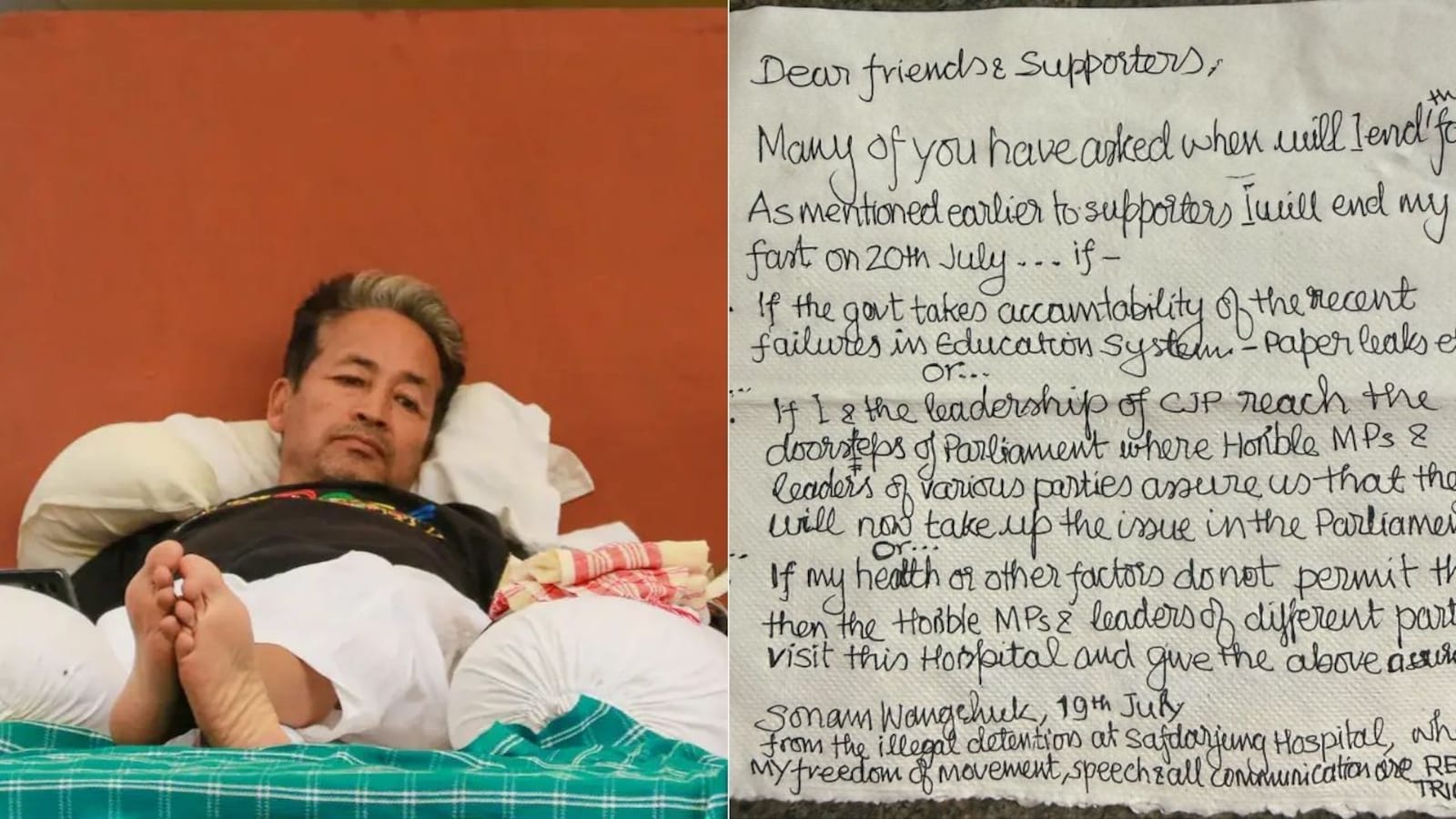
Activist and educator Sonam Wangchuk has articulated three specific conditions under which he intends to conclude his ongoing hunger strike, which has now entered its fourth week. Currently situated at Delhi's Safdarjung Hospital following his removal from a protest site at Jantar Mantar on July 18, as reported by NDTV, Wangchuk has maintained that his protest remains active despite his current medical status.
Wangchuk’s demands center on the recent controversies surrounding the NEET examination paper leaks. His primary conditions include a formal acknowledgment of systemic failures within the education sector, a commitment from political leadership to raise the issue of examination integrity within the Parliament, and a personal visit from senior political figures to provide assurances regarding these commitments. The activist, who has previously led various movements concerning Ladakh and educational reform, joined the Cockroach Janta Party’s protest on June 28 to call for the resignation of Education Minister Dharmendra Pradhan.
The circumstances surrounding his current hospitalization have become a point of legal and public discourse. Delhi Police moved Wangchuk to Safdarjung Hospital after medical professionals expressed concerns regarding his deteriorating health and the potential for organ failure. This action followed a directive from the Delhi High Court, which had urged authorities to take necessary measures to preserve the activist's life.
Legal proceedings regarding his care are ongoing. Wangchuk’s wife, Gitanjali Angmo, recently petitioned the Delhi High Court to facilitate his transfer to a private medical facility. However, Justice Mini Pushkarna declined to grant interim relief, stating that the government acted within its rights to ensure medical oversight given the activist's refusal to voluntarily seek treatment. The court observed that there was no evidence of forced medical intervention or a violation of autonomy, as Wangchuk had consented to oral medication. Legal representatives for the family have indicated that they intend to challenge this ruling before a double-judge bench to seek an urgent review of the situation.
As the situation develops, the focus remains on the intersection of public protest and state intervention in health emergencies. The outcome of the proposed Sansad Chalo March and the government's response to the activist's demands are expected to have broader implications for the ongoing discourse surrounding educational transparency and the right to peaceful assembly in the national capital.